Understanding the Key Differences in Male Infertility Conditions
Infertility affects nearly 1 in 6 couples, and in about half of these cases, male factors play a contributing role. Even, The male is solely responsible in about 20% of cases and is a contributing factor in another 30% to 40% of all infertility cases.
The two most prevalent disorders affecting male fertility are oligospermia and azoospermia. Although they both have to do with problems with sperm count, the diagnosis, etiology, and available treatments differ greatly.
Dr. Puneet Rana Arora, a Senior IVF Expert in Delhi NCR and Director at CIFAR IVF Centre(Gurugram), will give you a clear and straightforward explanation of these disorders if you’re attempting to comprehend them for yourself, your partner, or a loved one.
What is Azoospermia?
Azoospermia is a medical condition characterized by the complete absence of sperm in the ejaculate.
Remember; It affects about 1% of all men and around 10-15% of infertile men.
Types of Azoospermia:
- Obstructive Azoospermia (OA): Sperm production is normal, but there’s a blockage in the reproductive tract that prevents sperm from reaching the ejaculate.
What are the causes of Obstructive Azoospermia (OA)?
- Vasectomy,
- infection,
- trauma,
- congenital absence of the vas deferens.
- Non-Obstructive Azoospermia (NOA): – The problem lies in the production of sperm within the testicles.
What are the causes of Non-Obstructive Azoospermia (NOA)?
- Genetic disorders (e.g., Klinefelter syndrome),
- Any Hormonal imbalances,
- Testicular failure,
- If you are Exposure to toxins,
- Previous cancer treatment.
What is Oligospermia?
The term “oligospermia” refers to a low number of sperm in the void. The World Health Organization (WHO) says that oligospermia happens when there are less than 15 million sperm per milliliter of semen.
Oligospermia- from Mild to severe condition:
- Mild: 10–16 million/mL
- Moderate: 5–10 million/mL
- Severe: Less than 5 million/mL
Causes of Oligospermia:
- Varicocele (scrotum veins that are too big)
- Poor hormone balance (low testosterone)
- Infections (such as STIs or mumps)
- Smoking, drinking, and drug use
- Being overweight
- Stress and other living choices
Azoospermia vs. Oligospermia – Key Differences
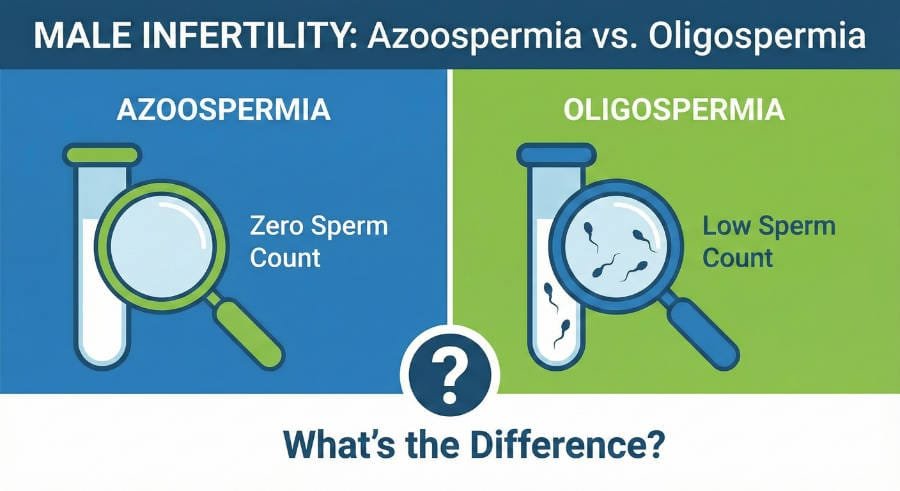
| Factor | Azoospermia | Oligospermia |
| Sperm Count | Zero sperm in semen | Low sperm count (<16 million/mL) |
| Type | Obstructive or Non-obstructive | Mild, Moderate, or Severe |
| Cause | Blockages, testicular failure, genetic or hormonal issues | Hormonal imbalance, varicocele, lifestyle, infections |
| Diagnosis | Semen analysis, hormonal tests, ultrasound, biopsy | Semen analysis, hormone tests, scrotal ultrasound |
| Treatment | Surgery, hormonal therapy, assisted reproduction (IVF, ICSI with sperm retrieval) | Medications, lifestyle changes, varicocele repair, ART |
| Chance of Biological Fatherhood | Possible with advanced sperm retrieval techniques | Higher likelihood, especially in mild to moderate cases |
Diagnosis and Testing
For both conditions, a semen analysis is the first step. If abnormalities are found, further evaluation may include:
- Hormonal tests (FSH, LH, testosterone)
- Genetic testing
- Scrotal ultrasound
- Testicular biopsy (especially in azoospermia)
Treatment Options
For Azoospermia:
- Obstructive type: At CIFAR IVF Centre we perform Surgical correction or sperm retrieval for IVF/ICSI.
- Non-obstructive type: Hormonal therapy (if applicable), TESE (Testicular Sperm Extraction), donor sperm if no sperm can be retrieved.
For Oligospermia:
- Lifestyle modifications = When treating oligospermia, our first step is to assess and address any modifiable lifestyle factors. This includes recommending weight loss when needed, advising patients to quit smoking and alcohol, and avoiding heat exposure to the testicular area.
- Medical treatment = If there’s an underlying medical issue like a hormone imbalance or infection, we offer targeted medical treatment.
- Surgical options = In cases where a varicocele is detected, surgical correction through varicocelectomy can significantly improve sperm count.
- Assisted Reproductive Technologies (ART = And when natural conception is difficult, we use Assisted Reproductive Technologies (ART) like IUI, IVF, or ICSI, depending on the severity of the condition. Even with low sperm counts, many of our patients have been able to father a child with the right approach.”
How CIFAR IVF Centre Helps Male Patients with Fertility Issues in Delhi NCR
At CIFAR IVF Centre, male fertility is treated with the same dedication, science-backed protocols, and compassion as female fertility.
Under the guidance of renowned IVF specialist Dr. Puneet Rana Arora, CIFAR offers a comprehensive, personalized approach for men diagnosed with azoospermia, oligospermia, or other sperm-related issues.
Here’s how CIFAR helps:
Advanced Male Fertility Evaluation:
CIFAR uses state-of-the-art diagnostic tools like hormonal profiling, semen analysis, DNA fragmentation tests, and testicular biopsy to find the root cause of male infertility.
Expert Urology and Andrology Collaboration:
For men with azoospermia, CIFAR works closely with top andrologists and microsurgeons for procedures like TESA, PESA, and Micro-TESE to retrieve viable sperm.
Customized Treatment Protocols under ART Law 2021:
Whether the problem is mild oligospermia or complete azoospermia, CIFAR tailors a plan that may include lifestyle counseling, medications, surgery, or direct sperm retrieval combined with ICSI (Intracytoplasmic Sperm Injection).
Genetic and Hormonal Counseling:
Men with suspected genetic causes of infertility receive proper counseling and advanced testing such as Y-chromosome microdeletion testing or karyotyping, ensuring informed decisions before planning IVF.
High IVF Success Rates with ICSI:
Even with very low or surgically retrieved sperm counts, CIFAR has helped many couples conceive using ICSI technology, where a single healthy sperm is injected directly into the egg.
Confidential & Supportive Environment:
CIFAR ensures male patients feel respected, heard, and supported throughout their fertility journey—breaking the stigma around male infertility.
Final Thoughts by Puneet Rana Arora
Both azoospermia and oligospermia can be emotionally and physically challenging diagnoses. The good news is that advances in medical science and fertility treatments offer real hope.
With proper diagnosis, personalized treatment plans, and support from fertility experts like CIFAR IVF Centre, many men can still achieve their dream of fatherhood.
Need Help with Male Infertility or Planning an IVF Cycle?
Schedule a consultation with Dr. Puneet Rana Arora and the expert team at CIFAR IVF Centre in Delhi NCR.
📞 099580 09305| 🌐 https://www.cifarivf.com/
Your path to parenthood begins with the right diagnosis and care.
Add Your Comment